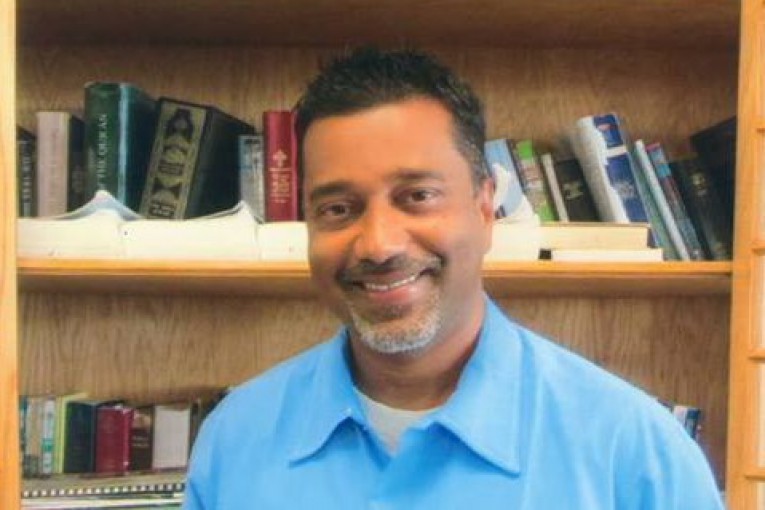
In 2009, Ajay Dev was wrongly convicted of 76 counts of raping his adopted daughter and sentenced to 378 years. Now, a decade later, he is having his Habeas Corpus hearing in Yolo County, attempting to exonerate him.
Listen for the first time as he talks about his experience behind bars in a California prison and listen to people around him talking about his case and how the jury got it wrong.
Greenwald is the founder, editor, and executive director of the Davis Vanguard. He founded the Vanguard in 2006. David Greenwald moved to Davis in 1996 to attend Graduate School at UC Davis in Political Science. He lives in South Davis with his wife Cecilia Escamilla Greenwald and three children.
You did a wonderful job with this podcast covering the case from when you first heard about it until the present–interviewing different people who have knowledge about the case.
Ajay speaking from jail tears at your heart as he explains how life has been the past 10 years — being away from his family and in prison when he has been wrongfully convicted. He also speaks to the issue of wrongful convictions in general and how people need to push for justice reform overall.
Thank you for your detailed coverage. Let’s hope all the new evidence (ex: 6 witnesses whom the accuser told she was lying) will finally show that Ajay’s conviction should be overturned.
I don’t know what happened in the actual trial. But a question that kept coming back to me was why didn’t (or did they?) the defense object to the alleged victim’s translation of the pretext phone call during the trial.
My thought is maybe they did not object because literally the translation was acceptable because Ajay would understand his line as a rhetorical answer, and didn’t think that the jury would convict him because of that. When the jury presented the verdict, it was too late.
Otherwise, rationally there is nothing wrong allowing the alleged victim to translate the inaudible line. If her translation was NOT contested by the defense, it should be treated as fact AFTER giving the defense a chance to contest. When the jury found that conversation pivotal for the verdict, the court should ask for contest. Did the jurors ask questions? Did the jurors ask about the translation if it was so important?
The Davis City Council meeting exposed a widening fault line in how the city approaches affordable housing, as the discussion shifted away from progress and toward demands for hard guarantees, which could potentially kill the project and discourage future developers from pursuing projects in Davis.
Proposition 36 has failed to deliver on its promises of safety, accountability, and mass treatment, instead fueling incarceration, straining local budgets, and deepening racial disparities across California, according to the Prosecutors Alliance and criminal justice reform advocates.
The California Racial Justice Act (RJA) is a meaningful step toward addressing racial discrimination in the criminal legal system, but remains inadequate as a tool for confronting deeply rooted structural inequities, according to Alex Frank, Race Forward's Director of Root Solutions for Public Safety.
The 126th annual Christmas Bird Count is a volunteer-based birdwatching and counting event taking place from December 14 to January 5, which combines volunteerism and birdwatching to support bird species and promote mental health.



David,
You did a wonderful job with this podcast covering the case from when you first heard about it until the present–interviewing different people who have knowledge about the case.
Ajay speaking from jail tears at your heart as he explains how life has been the past 10 years — being away from his family and in prison when he has been wrongfully convicted. He also speaks to the issue of wrongful convictions in general and how people need to push for justice reform overall.
Thank you for your detailed coverage. Let’s hope all the new evidence (ex: 6 witnesses whom the accuser told she was lying) will finally show that Ajay’s conviction should be overturned.
I don’t know what happened in the actual trial. But a question that kept coming back to me was why didn’t (or did they?) the defense object to the alleged victim’s translation of the pretext phone call during the trial.
My thought is maybe they did not object because literally the translation was acceptable because Ajay would understand his line as a rhetorical answer, and didn’t think that the jury would convict him because of that. When the jury presented the verdict, it was too late.
Otherwise, rationally there is nothing wrong allowing the alleged victim to translate the inaudible line. If her translation was NOT contested by the defense, it should be treated as fact AFTER giving the defense a chance to contest. When the jury found that conversation pivotal for the verdict, the court should ask for contest. Did the jurors ask questions? Did the jurors ask about the translation if it was so important?