
Sunday Commentary: Comments, Anonymity, Racism and Open Discussion
As I write this, the Vanguard Editorial Board has discussed a formal policy on comments twice and…

As I write this, the Vanguard Editorial Board has discussed a formal policy on comments twice and…
Yesterday afternoon it was reported that the Los Angeles Police Department is “no longer heeding federal immigration…
A cartoon published in the Davis Enterprise that seems to depict border guards in a flood of…
(from city of Davis Press Release) Recipients in four categories have been selected to receive Thong Hy…
Last week, the NBA had to deal with owner Donald Sterling’s racism caught on tape. They had…
by Gloria Partida Raising a daughter, that can best be described as mercurial, has been “delightful” –…
It has been a few years since I heard a speech that popular culture has largely stripped…
“I have a dream that my four little children will one day live in a nation where…
by UC Newsroom When Martin Luther King, Jr. stood on the steps of the Lincoln Memorial in…
by Robb Davis In the last few weeks we have heard poor and homeless people in our…
Annual Martin Luther King Jr. Celebration on January 20th to Feature Dana Vickers Shelley from the Southern…
On Saturday December 7, 2013, wearing another hat I wear in the community, I facilitated a Davis…
A year ago, the Davis Human Relations Commission hosted its forum Breaking the Silence of Racism. A…
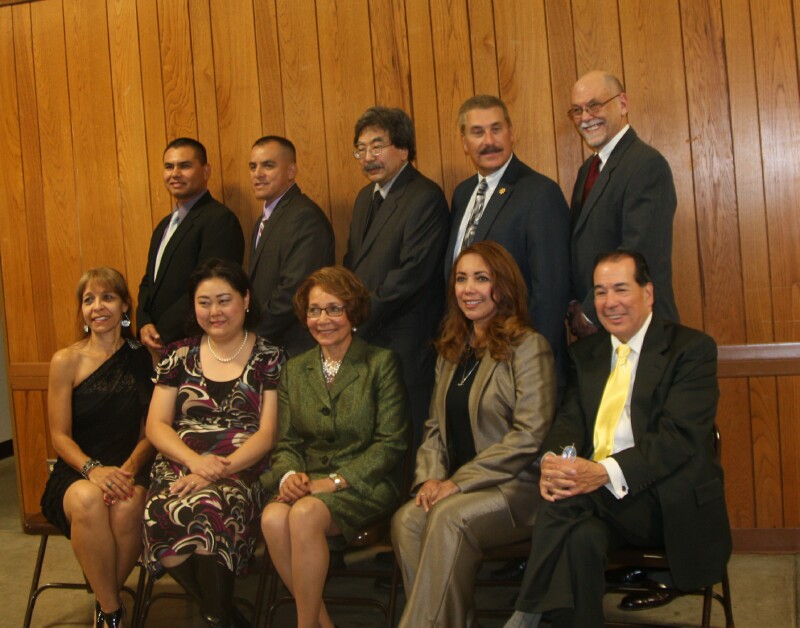
Saturday, October 19, 2013 marked the 29th annual Concilio Recognition Dinner/Dance & Scholarship Fundraiser where the proceeds from the event go to scholarships to help provide assistance to low-income local residents go to college.
Those being recognized this year include: Landy Black and G Richard Yamagata with the Board of Directors Award; Bob Ekstrom of the Yolo Family Resource Center and Marge Lee of CommuniCare Health Centers with the Community Award; Marlene Bell of CTA and Sandra Olszewski, a teacher at Woodland High School with the Education Award; owners Richard Cruz and Ismael Resendiz of Master Tech of Woodland with the Business Award; Norma Alcala with the PilarAndrade Award and Carlos Alcala with the Rick Gonzales Sr. Award.
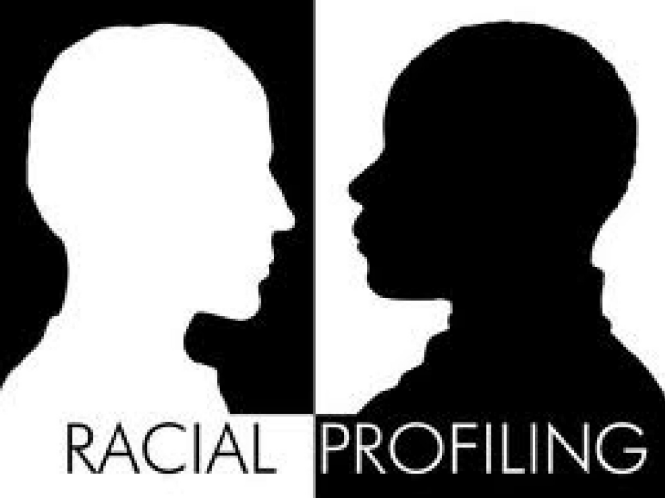
My column this weekend on the Eli Davis incident made me realize that even well-intentioned people really do not understand what racial profiling is, and why it might be demoralizing to minority populations.
As one poster noted, “It’s difficult to fathom why police should be criticized for stopping a bald white guy if ‘bald white guy’ was the victim’s description.”
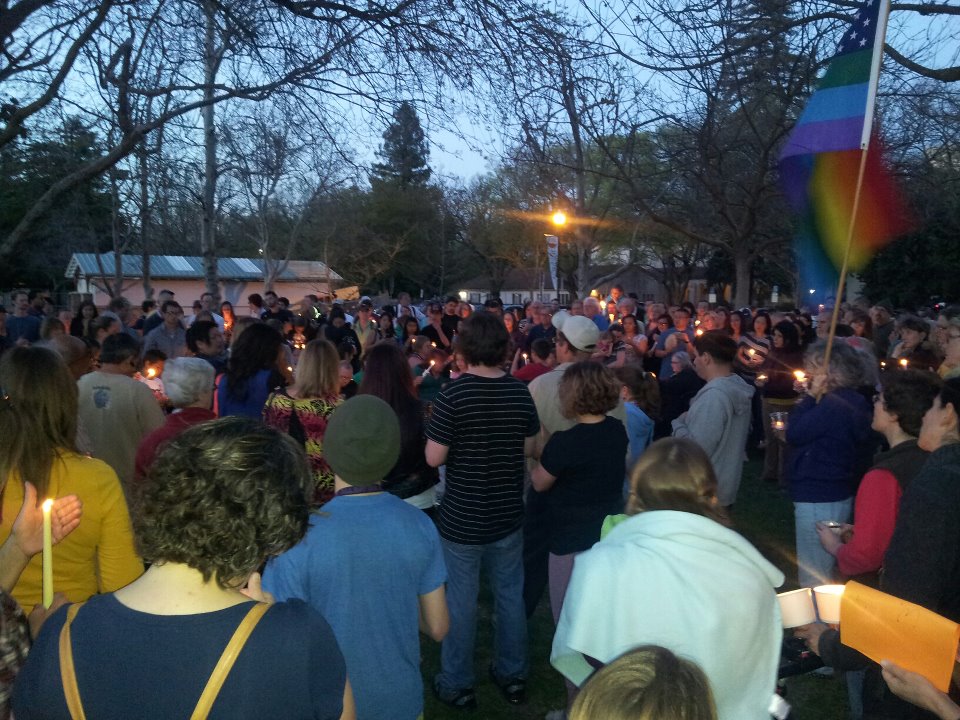 Last week we described the reactions of a number of people on the street who expressed the belief that anti-gay attacks, like the one that appears to have occurred when Clayton Garzon allegedly beat Mikey Partida while yelling anti-gay epithets, do not happen in our town.
As Jonathan London, a Davis resident with a periodic Sunday column in the Davis Enterprise, amply notes there is a prevailing sentiment that “this kind of crime does not happen in Davis: This is not who we are.”
 by Cecilia Escamilla Greenwald
Editor’s Note: This column is re-printed from one published on April 1, 2007.
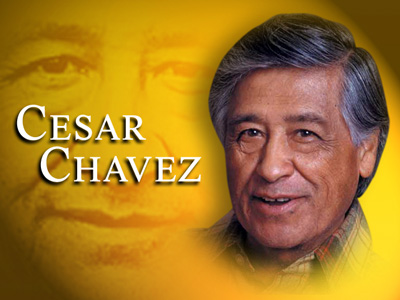
On August 18 of 2000 state legislation was signed to establish Cesar Chavez Day in California. For many farm workers it was finally an opportunity to honor a man who organized them, led the largest grape industry boycott and formed the United Farm Workers requiring growers to bargain with farm workers who vote for unionization. For many it’s a day to show respect to a man who demanded respect for those, who like him, toiled in the fields day after day.
For me however, it is one out of 365 days, in which I remember a woman, who like Cesar, had motivation sufficient to act. She had “ganas.” A woman who thought of others. A woman who fought for the rights of others in the fields in injustice. A woman who led a strike with her co-workers, marched in on the boss and demanded that cold water, toilet paper and paper towels be provided at all times or they would walk. A woman who got what she wanted because Don Pedro knew that although he could get others to do the work they would not be as dedicated, hard-working, and honest as a woman named Adela Cardona Muñoz Escamilla, lovingly called Doña Adela by my four brothers and three sisters.
I do not often pay much attention to the “What do you think?” section of the local paper. In fact, I do not believe I have ever written a column on it. But the one today, asking about the hate crime beating, caught my attention.
In fairness, the question was not framed as well as it could be: “Did the recent hate crime beating change your opinion of Davis?” The problem with it is that you could think that this type of thing always occurs and it would just reinforce your view of Davis, and you could think this is an outlier and therefore discount it as having any meaning.
By Robb Davis
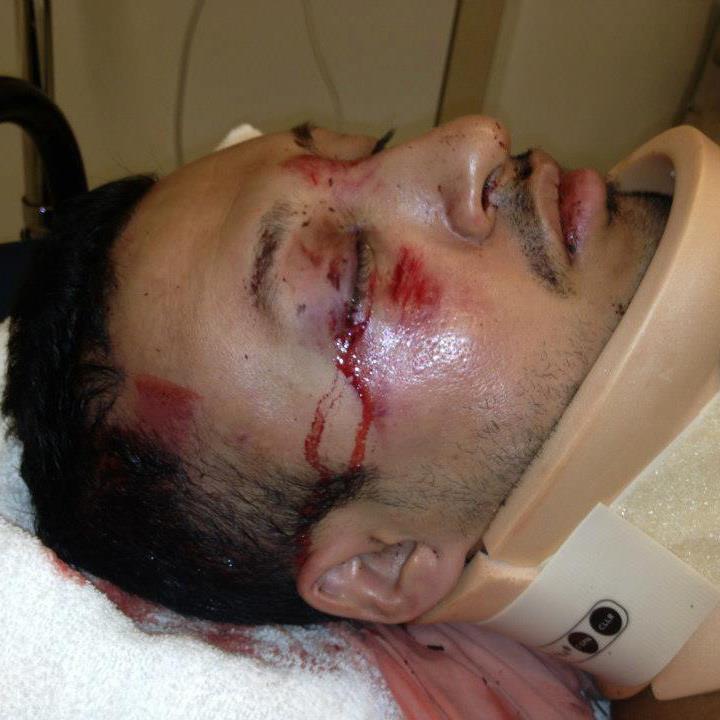
There has been much speculation about the factors that might lead someone to commit the kind of crime that was perpetrated against Mikey Partida. While some of it may be premature it is a normal human response to try to make sense of something that is so senseless.
Certainly, much more will be learned about the event, the things that led up to it, the story of the perpetrator (whoever it turns out to be), and the likely outcome of a conviction, as the legal process moves forward. We also know with certainty that Mr. Partida will need to go through a painful process of physical and psychological healing. Some scars – physical and psychological – may never fully heal. In quotes from Mr. Partida we have already learned of his fears and anxiety about moving around his hometown. Physical healing is only the first of many long steps he will have to take.
 In 1997, I was an intern working in Washington, DC, and one of my issues was hate crimes. Earlier that year, President Bill Clinton had called on Congress to pass the Hate Crimes Prevention Act. However, that legislation would die in 1998 and it was not for a decade later (in 2009) that the act was signed into law by President Barack Obama.
In 1998, there were two horrific hate-motivated crimes. The murder of Matthew Shepard, a student in Wyoming, who was tortured and murdered because of his sexual orientation, and the decapitation of James Byrd, an African-American man, tied to a truck by two white supremacists, dragged and decapitated.