
Land Use/Open Space

Sunday Commentary: And Now We Know the Truth About DACHA

housingIt is perhaps an oversimplified statement that those who have nothing to hide, hide nothing.  But as the Vanguard closes in on five years examining public documents and scrutinizing the actions of local government, I think even from a political perspective it is best to lay all of the cards on the table and let the chips fall where they may.

DACHA (Davis Area Cooperative Housing Association) was a vexing problem for a watch dog, with competing claims made by the developer/consultants, the DACHA membership and the city.  Complex laws and documents made it more difficult.  That is why from the start, we asked for the city to conduct a third-party investigation into what happened.
All Sides Seem Satisfied With the Grand Jury Report on DACHA

housingCity Relieved At Finding of No Inappropriate Gift of Public Funds –

Yesterday at 1 pm the Yolo County Grand Jury released their report on their investigation into DACHA (Davis Area Cooperative Housing Association), something that we had called on a year and a half ago when the Davis City Council by a 3-2 vote refused to appoint their own independent investigator.

As one person noted on Tuesday, instead of an investigation into DACHA on the Davis Taxpayer’s dime, we had one on the Yolo County Taxpayer’s dime.

BREAKING NEWS: Grand Jury Report Hammers Davis on DACHA But Does Not Find Misuse of Public Funds

housing.jpgThe Yolo County Grand Jury issued a scathing report on Davis’ handling of the DACHA (Davis Area Cooperative Housing Authority) issue.  While in general it praised the City of Davis’ affordable housing program, it reported that the city was “far less successful” with DACHA.
“DACHA encountered practical and affordability problems from the outset and currently no longer exists as an entity, the report finds.

Council To Consider Changes to Third Street

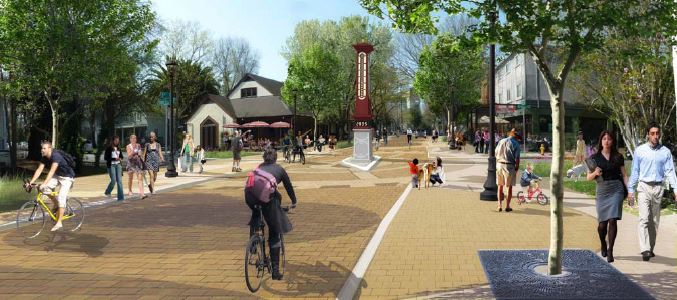
Third-Street-Design-StockThe City of Davis just finished its comprehensive remodel of Second Street, with the help of grant funding.  Now the city will look at redesigning Third Street, pending council approval of the plan.
According to the staff report, “The Third Street Improvements project is a streetscape design and construction project of the two-block segment of Third Street between A Street and B Street as well as the B Street alley between Second Street and Fourth Street.”


Tree Cut Down Along Fence Line of Railroad Rattles Frayed Nerves

Ill-Advised Move by Land Owner at Slatter’s Court Leads to Potential Problems for City on Fence Issue with Union Pacific –

Slaters-2

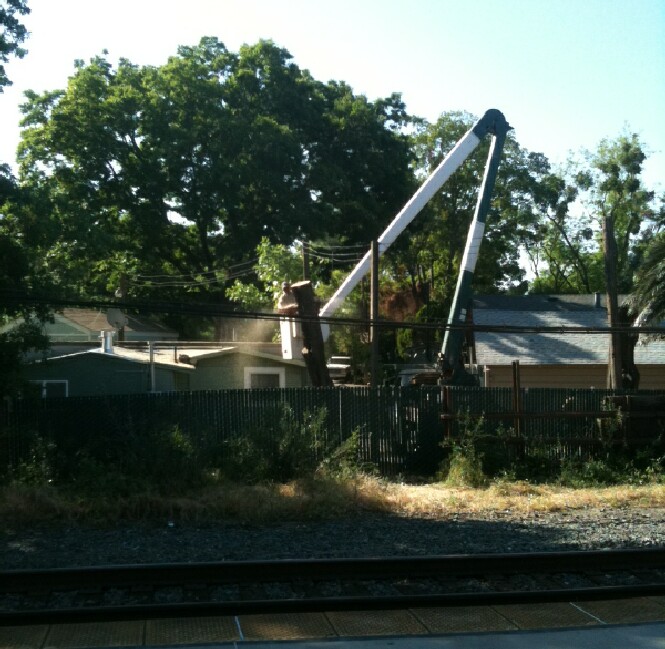
For a time on Friday morning, many thought that Union Pacific had blatantly trespassed onto private property, cutting down a tree along a fenceline.  Instead, it was the owners of Slatter’s Court that cut down the tree, unbeknownst to anyone.

Nerves were already shot after the railroad fenced off a gate at the same location a couple of weeks ago, angering the city and residents as the city was trying to gain assurances that the railroad would not act without at least notifying the city.

Second Street Implements Shared Lane or “Sharrow” Pilot Project

sharrowThere are two things that I don’t believe in: coincidence and leprechauns.  In yesterday’s story about E Street Plaza parking returning to paid status, we also made the remark that the city has revamped the Second Street Corridor, which was funded through the federal American Reinvestment and Recovery Act  and City of Davis Redevelopment Agency funds, at a time when the city is lacking funding to do basic road repair work, and it gives us the opportunity to discuss parking once again.
We went on to make the observation that, while we say we want our downtown and core to be bike and pedestrian friendly, there are no bike lanes and, in fact, bike travel is rather dangerous given the traffic, lack of visibility and other problems.

E Street Plaza Parking Lot to Return to “Paid” Status

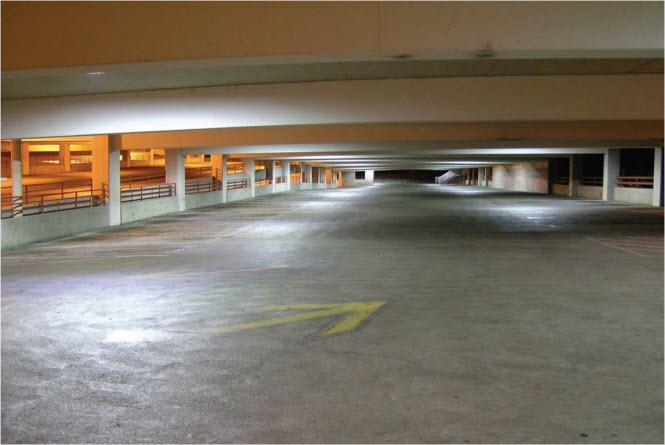
Parking-GarageCity Still Lacks Integrated Plan For Downtown Parking and Transportation –

The City of Davis sent out a press release yesterday to let the public know that upon the completion of the Second Street Corridor Improvements project, parking restrictions in the E Street Plaza parking lot will return to “paid” status on Monday, May 9, 2011.

While it seems the true purpose of the press release was to discuss the Second Street Corridor Improvements project, which was funded through federal American Reinvestment and Recovery Act and City of Davis Redevelopment Agency funds at a time when the city is lacking funding to do basic road repair work, it gives us the opportunity to discuss parking once again.

Commentary: City Does Not Back Down After UP Power Play

Train-April-2.jpg

The move by Union Pacific earlier this week, in putting up a gate to block access across the tracks, is obvious a power play by the railroad giant, hoping to intimidate the city into backing off their opposition to the larger railroad fence that would permanently cut off access to Olive Drive residents.

It was heartening to see a strongly-worded response by a city that is often far too timid in advocating for residents on a regional level.  “The city is extremely disappointed that UPRR has chosen to proceed with construction of the fence to block these gates,” a statement read

Union Pacific in a Surprise Move Blocks Gate Access to Tracks, Angering City and Mayor

Train-April-2

In a move that angered leaders in the city, Union Pacific crews built fence segments on Monday in front of the gates at Slatter’s Court and Davis Mobile Estates, blocking access from Olive Drive to the Davis Amtrak Station.  These gates have been in place for many decades and provide access to the Depot and downtown Davis for the residents of Olive Drive.

According to a pointed press release from the City of Davis, city staff and the mayor met with Union Pacific on Thursday April 21st to discuss safety issues at the Depot and the Olive Drive area, and the City’s application to the California Public Utilities Commission for an at-grade crossing between the Olive Drive neighborhood and the Depot.

Commentary: Still Unanswered – Do We Need 610 Units of Additional Housing Right Now?

Con-Agra-FebThere are so many different angles and aspects to the Cannery Project that it is taking a lot of time to untangle them.  Already we have talked about the implications of re-zoning the property and pushing any business parks to the periphery where they will be subject to a Measure J vote and an uncertain status.
But just as big is the question as to whether we need additional housing at this time.

Commentary: The Cannery-Business Park Gamble

Con-Agra-FebIt is a rare event when I agree with former Davis Mayor Jerry Adler, but in this case I think his reading was right on.

One of the top recommendations of the Business Park Land Strategy as cited by Jerry Adler  is to “Preserve existing Business Park, Office, and Industrial land by discouraging conversion to uses such as housing, institutional, and commercial recreation.”

Commentary: CHA Reduced to Role of Side Show and Distraction

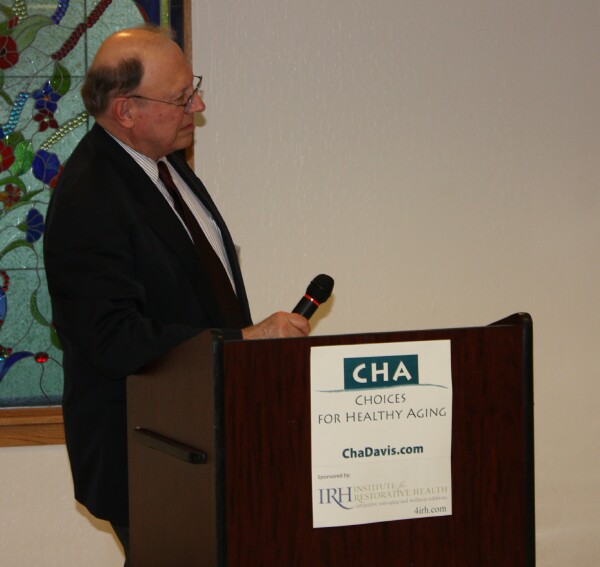
CHA-Don-V.jpgIn late March, the Vanguard used a public records request to show the fundamental failure of Choices for Healthy Aging to impose its agenda on the ConAgra site.
“We greatly appreciated ConAgra’s willingness to conduct two lengthy meetings with CHA representatives, accompanied by senior city staff,” they wrote in conceding failure. “However, in all frankness we do not believe that our objectives can be met with the current land use proposal for a ‘multi-generational’ project in which seniors constitute a small minority and the disabled are not specifically considered.”

Council, Community Present Array of Thoughts on Con Agra

Con-Agra-Feb.jpgIf the ConAgra developers were looking for direction, they probably got more confusion than anything else, as council was all over the map in terms of their comments and direction.

In the end, there seemed to be at least three council members wanting to revisit the issue of zoning.  The problem that the city faces on the zoning issue is that no one seems to agree on the ideal land use of the site.

Commentary: Why Build 610 Units Now? I See No Valid Reason

Con-Agra-FebI have been waiting for a long time for someone to bring up Wild Horse Ranch in conjunction with the current ConAgra project.  I supported Wild Horse Ranch for two primary reasons.  First it was relatively small.  Second, I wanted it to set a new benchmark for development in terms of a number of issues such as sustainability and accessibility.

Unfortunately, it was really the wrong time to bring forward a housing development.  The voters quickly rejected it and it is time to move on.  I have no sour grapes over that as one reader wrote yesterday.  I also do not see much of a contradiction in my supporting that project while opposing ConAgra.

A Chance to Kill Cannery?

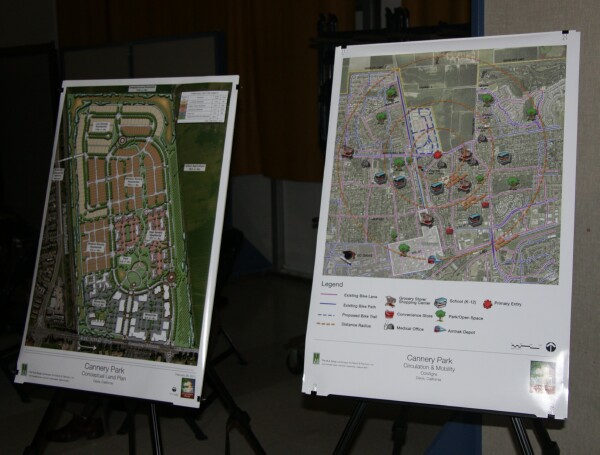
ConAgra-Presentation-02-11-2Council Gets Chance to Hear Progress of Project and Provide Feedback on Key Issues –
It was obvious that the planning of the Cannery develpoment was not going anywhere in any rapid manner.  The city and the developer held their first outreach meeting back in December and received fairly poor feedback.  It was obvious that the project was hardly changed from two years prior and even more obvious that it was far from where it needed to be.

However, the second presentation at the end of February still simply tweaked the first proposal, as though the problem were not the core project but rather on the margins.  From our view, on a number of levels, this was simply a non-starter.

Public Records Reveal Abject Failure of CHA To Impose Agenda

CHA-Don-VWhen a long list of Choices for Healthy Aging (CHA) released their co-written op-ed a week ago they were in effect raising a white flag in trying to influence the development at ConAgra.

They write, “Davis may be missing an extraordinary opportunity to once again be a leader in innovative housing. ConAgra, the owner of the largest undeveloped land parcel within city limits, the former Hunt-Wesson cannery, wants to develop that 100-acre site for residential and commercial use.”

Word To The Wise: The World View of Choices For Healthy Aging

covell_village-600By E. Roberts Musser –

The group Choices for Healthy Aging (CHA) was scheduled on the agenda for the March 10, 2011 Davis Senior Citizens Commission meeting, at the suggestion of Commissioner Mary Jo Bryant. This occurred in advance of a presentation by city staff on senior housing in general and the Cannery project in particular. The hallmark of what CHA envisions, as presented by CHA member Don Villarejo, is encapsulated in the list that follows:
  • Age-qualified senior housing development
  • With home ownership
  • A community lodge

Council Looks to Increase Traffic Speed Limits, Risking Safety

Speed-LimitThe Davis City Council has an item on their consent calendar this evening that is a classic example of the Law of Unintended Consequences.  Or as some people say, no good deed goes unpunished.

The basic speed law in California revolves around the 85th percentile.  That is the speed that only 15% of the drivers exceed.  Vehicle speeds are measured periodically on all major streets.  In a town like Davis that would include Russell Boulevard, Covell Boulevard, F Street, Anderson Road, and many more.

CHA Not Happy with ConAgra Proposal

covell_village-600We have been hearing for some time that Choices For Healthy Aging (CHA) was not happy with the ConAgra proposal, and they have finally gone public with those concerns.

They entitle their op-ed, which was co-written by a list of people so long it would almost be easier to name the people who did not write it than the people who did, “Our last, best chance for development responsive to community needs.”

Sunday Commentary: Looking at the Plastic Bag Ban Debate

plastic-bagSeveral people this week have reported having been a bit depressed by the course of the plastic bag ban debate that has occurred on this site and in the community.  I would respond, as I have in the past, that this is as much about educating the public as it is about the fact that people tend to respond most when they disagree with a proposed policy as opposed to when they agree with one.

Education matters, after all, as there was a time people were not very conscious about the health hazards of smoking or other forms of pollution and they bought into the industry rhetoric that environmental regulation would harm the economy.  Over time, people have recognized that environmental impact is as much a public health issue as anything else.