
Details Emerge of Alleged Hate Incident, Police Misconduct in March 6 UC Davis Arrest
Last night at the Davis Human Relations Commission meeting, students expanded on a police incident that occurred…

Last night at the Davis Human Relations Commission meeting, students expanded on a police incident that occurred…
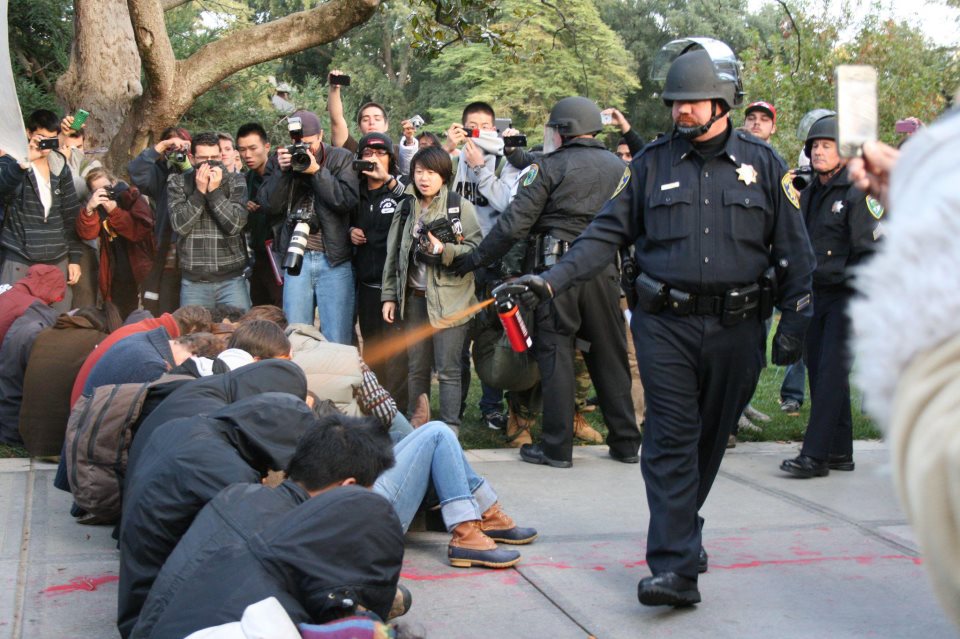
When former UC Davis Police Lieutenant John Pike received a workers’ compensation award that was greater than the payout to his victims, the Vanguard wrote that the payout makes both a mockery of the system and the incident.
The Vanguard was not alone in its indignation.
It is interesting that this month saw both the culmination of the worker’s compensation process for former UC Davis Police Lieutenant John Pike, as well as the presentations last week of the UC Davis Police Oversight Plan, which are part of the outgrowth of the pepper-spray incident that has its dubious second-year anniversary coming up in just under one month.
“At UC Davis there has been a serious breach of trust between the UCDPD and the campus community,” the report on the oversight plan indicates. “The establishment of oversight is an important step in working to build a bridge to restore trust between the police and the campus community. To have credibility, oversight must be visible and must be a strong, effective model.”
Apparently an administrative law judge has taken the old adage – this hurts me more than it hurts you – to a new a level when deciding to award Lt. John Pike 38,056 dollars. Lt. Pike filed a worker’s compensation claim in which he claimed depression and anxiety brought on by threats and criticism he and his family received following the infamous November 18, 2011, incident on the UC Davis Quad.
On the other hand, 21 students settled their claims against the university, related to Lt. Pike’s decision to pepper spray protesters on that November 18 day, for a mere $30,000 each. The university admitted to no wrongdoing in that dispute. They deny and “continue to deny each and all of the claims alleged by Plaintiffs in the Litigation. Defendants contend that they acted reasonably and in good faith.”
In the wake of the pepper-spray incident in November 2011 and the subsequent settlement of the lawsuit with pepper-spray victims, UC Davis in the last week has released a report and a plan to implement a two-part program modeled on other successful police oversight programs across the country. This would be “comprised of an oversight board with members selected from the UC Davis community, and an independent civilian investigative division that will investigate complaints of misconduct filed against UC Davis police officers.”
This differs somewhat from the program that the city of Davis implemented in late 2007 with the hiring of Police Auditor (originally designated as Police Ombudsman) Robert Aaronson.
 Limited details are available at present in an incident that happened on Sunday morning on the UC Davis campus. Officials are describing it as “a series of crimes that range from vandalism to breaking and entering.”
“To date, we are aware of seven campus facilities and several parked cars that were damaged, including 31 broken windows,” Chancellor Linda Katehi wrote in a letter to the “Campus Community.” She noted, “In the course of these acts, a hateful racial slur was written on a blackboard.”
Former UC Davis Lt. John Pike filed a worker’s compensation claim for injuries suffered on November 18, 2011, during the incident in which he doused protesters with pepper spray on the UC Davis Quad.
While much of the information remains confidential, protected under privacy and other rights, the form indicates that the impact was “psychiatric” and affected the “nervous system.”
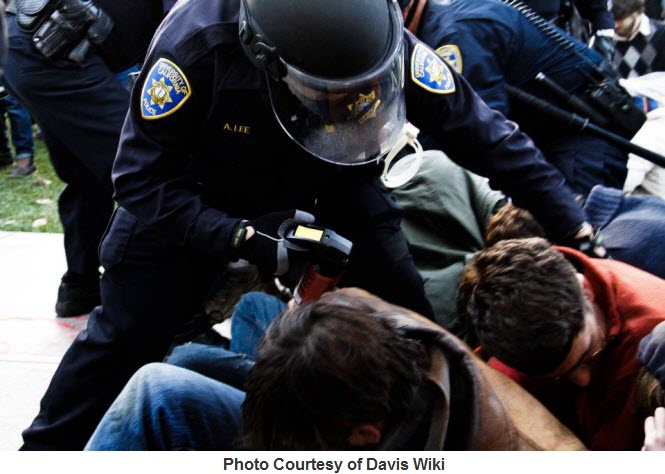
In May of 2012, following the release of the Kroll Report and the Cruz Reynoso Task Force report with the names of police officers redacted, the Los Angeles Times and Sacramento Bee argued that the public and press interests were not represented in the agreement to suppress the names of officers who were involved.
In a case that is likely destined for the state’s Supreme Court, the First Appellate District, Division Four, ruled in favor of the newspapers and ordered the release of the names of 12 officers named in the two reports commissioned by the University of California Regents.

Early this morning, the Vanguard received a call that protesters had locked down Dutton Hall and barricaded all entrances to the building. When the Vanguard arrived on the scene this morning, there were estimated to be roughly 30 protesters who had locked themselves up in the building.
There was a single police officer – not authorized to speak to the press – and a single university official – also not authorized to speak to the press – giving instructions to students and employees who mainly sat outside of the building awaiting to hear instructions.
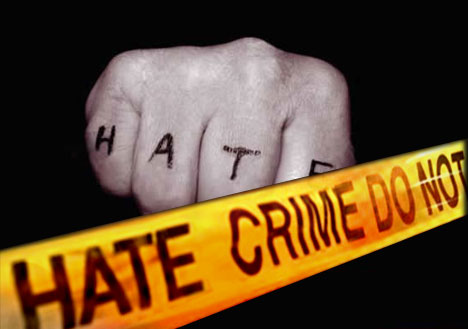
Details at this time are sketchy, but officials from the UC Davis Police Department are confirming that a crime is being investigated as a hate crime.
According to Campus Crime Alert Bulletin, the incident occurred on Sunday, May 12 at 8:10 p.m. The victim and a witness were walking along Levee Road near Brooks Road when a burgundy Jeep SUV “pulled up alongside of them.”
 David Snyder, 32, was booked into the Yolo County Jail on Sunday, following his arrest on possessing explosives and materials with the intent to make a destructive device, and possessing firearms on campus, UC Davis announced on Sunday. Bail is set at two million dollars.
Mr. Snyder, a UC Davis junior researcher in a campus chemistry lab, with a two-month appointment that expires on January 31, is being held in connection with a January 17 explosion in an apartment in the Russell Park housing complex on campus. He has been placed on leave, pending investigation.
On Wednesday, a federal judge gave final approval to the settlement that UC Davis students and recent alumni reached with the university in late September.
Ten months after the November 18, 2011, pepper-spray incident, on September 26, 2012, attorneys for 21 UC Davis students and recent alumni announced the details of their settlement with the university over a federal class-action lawsuit.
Back in November, one of the critical questions was whether Kroll would be granted subpoena power. Andy Fell of the UC Davis News Service told the Vanguard on November 30, 2011: “Both campus and UC will cooperate fully with them and make available to them any documents they need, subject only to legal restrictions such as those governing student records, personnel files etc. As a private contractor, Kroll doesn’t actually have subpoena power. But they are going to get whatever they want.”
On Wednesday, we finally learned the terms of the pepper-spray settlement. I was covering the federal civil rights trial of Luis Gutierréz so I missed the press conference. However, I was quickly able to speak with two attorneys and a protester, and the articles appeared on Thursday and Friday.
I will not mince words about my initial reaction – I actually felt physically ill. They did not get much and we the community did not get much. $1 million spread out turned out to be about $30,000 per student. They got an apology that was rendered useless by the fact that the officers did not admit wrongdoing. Finally, the ACLU gets to help shape policy – which is probably the only real redeeming aspect of this settlement.
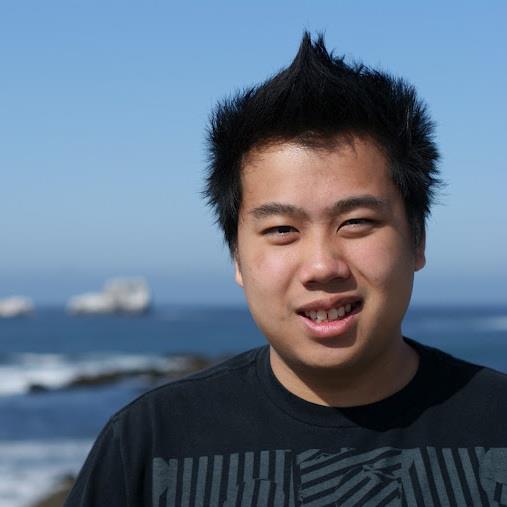 In the press conference at the Quad on Wednesday, Ian Lee spoke. He was a first-year student, two months into college, when he got involved in the protest that would ultimately alter his life.
“By now, the pepper-spray incident is almost a bit cliché: students protested, the University sent in riot police, and then the police brutalized us with pepper spray,” he said in his speech Wednesday. “But I urge people interested in this case to think about the pepper-spray incident more complexly. The reason we were protesting was that the University had proposed unfair and unreasonable tuition hikes.”
On Wednesday, the terms of the settlement of the lawsuit filed by students pepper sprayed on the UC Davis Quad, November 18, 2011, was announced. Among other things, the students would receive around one million dollars, amounting to 30 thousand dollars each.
In addition, Chancellor Katehi would be required to write a written apology to each student and the ACLU would play a role in the development of new practices.
UC Davis Agrees to Formally Apologize to Students and Implement ReformsTen months after the November 18, 2011, pepper spray incident, attorneys for 21 UC Davis students and recent alumni announced the details of their settlement with the university over a federal class-action lawsuit. The announcement comes two weeks after UC Regents approved the agreement and after the agreement was certified in US Federal Court.
For the second time in a month, the Sacramento Bee beat everyone to the punch, publishing what seemed to be internal emails. This time highlights, among other things, documents the university has attempted to keep under wraps, even from Kroll, about the legal authority under which the university acted.
This is not a small matter, for there are questions about the legal authority under which the university acted. Questions that now only grow stronger.
Agreement Expected to Be Publicly Released in Two Weeks – Steve Montiel, the Media Relations Director for the UC Office of the President, told the Vanguard that a federal court is expected to certify the agreement in roughly two weeks. At that time, the details will be released to the public.
After the Vanguard broke the story about the pepper-spray suit’s settlement on Tuesday, we were taken aback by some of comments, and not just on the Vanguard, that assumed that this suit was just about money.
The comment that surprised me the most was made by Supervisor Matt Rexroad, who said that the protesters “do not deserve a dime” even though he admitted that he had not spoken with or met any of the protesters, nor was it likely that he read the complaint itself.